
Roulette






6 / 7














Online roulette: European, French and American
A ball, a wheel, and the same trade-off before every spin: stake wide and win small often, or aim narrow and wait a long while. Roulette sits entirely inside that choice, which is why the game makes sense from your very first round.
This section gathers our roulette tables, one of the families in our online table games, open at any hour. Here is what actually happens on the felt, what separates the three variants, and a straight answer to the question everyone asks about winning methods.
What actually happens at a roulette table
The felt reads in two zones, and that reading is enough to understand the game.
Inside bets target a single number or a small group of neighbouring ones. They land rarely but pay heavily: a straight-up bet returns thirty-five times the stake. That is the thrill zone.
Outside bets cover broad sets — red or black, odd or even, a dozen. They come in far more often, for modest returns, frequently equal to the stake itself.
The key point: these two zones do not change your expected return. They change the rhythm. Backing red does not bring a win closer, it simply spreads the wins differently over time. Many players switch between the two within a single session.
The three roulette variants, and the only figure that counts
Our catalogue brings together the three main families. What separates them comes down to a detail few players check, and which weighs more than any method ever could.
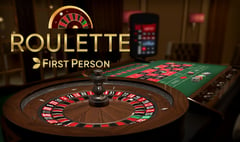
European roulette has thirty-seven pockets: the numbers 1 to 36, plus a single zero. It is the benchmark, and the most widespread in Belgium.
French roulette uses the same single-zero wheel but adds rules that favour the player when the ball lands on zero. Depending on the table, part of the outside stake is returned or put back into play.
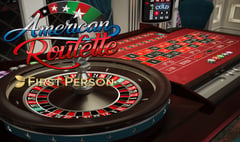
American roulette adds a double zero, making thirty-eight pockets. One pocket more, and the house edge very nearly doubles.
Hence the only genuinely useful rule: given the choice, take a single-zero table. That is not a trick, it is arithmetic — and it is the one lever that actually shifts your odds. Each table's return figure sits in its information panel, as our glossary of casino terms explains.
What each bet pays
Roulette payouts follow a fixed logic, and every table displays them. The narrower your aim, the higher the multiplier.
A straight-up bet on one number pays thirty-five to one. A bet on two neighbouring numbers drops to seventeen to one, on three numbers to eleven, on four to eight. Out on the edges of the felt, a dozen or a column pays two to one, while red, black, odd and even return one to one.
Those ratios are identical everywhere. What varies from table to table is what happens to the outside stake when zero comes up — and that is precisely where the French variant makes its difference.
« How to win at roulette »: the honest answer
It is the most asked question about this game, and most sites answer it by selling methods. We would rather be clear: no strategy lets you win at roulette over time.
The best known, the martingale, doubles your stake after each loss to recover everything at once. It fails for two unavoidable reasons. First, every table's betting limits: a handful of consecutive losses is enough to reach the ceiling, and the sequence stops there. Second, your budget is not infinite — doubling seven times in a row from a small stake already demands considerable sums.
The other systems — gentle progressions, Fibonacci sequences, backing numbers that are « due » — hit the same wall: every spin is independent of the last. The ball has no memory, and seven reds in a row make black no more likely on the eighth.
What those methods really do is change the shape of your results curve, not its expectation. Plenty of small wins, then one loss that erases them all.
What you genuinely control
Since the outcome escapes you, it is worth knowing where you do hold sway. Three things, and they matter more than people think.
The type of bet. It sets your playing rhythm: frequent small wins, or rare large ones. Up to you to know what you came for.
The variant. One zero rather than two is the only decision that works mathematically in your favour.
Budget and duration. Set them before you sit down, not along the way. Deposit caps and session limits take seconds to configure from your account — a useful habit on a game whose tempo can pick up without you noticing.
Tables at your own pace, with no waiting
Our tables are fully automated: no betting window to observe, no other players to depend on, no wait between spins. You spin when you are ready and leave the table whenever you like.
That differs fundamentally from tables hosted by a presenter, which set their own cadence and bring several players together at the same moment. If that atmosphere is what you are after, it sits in our section of tables in real time.
Cards and three-faced dice complete this section, each with its own codes: if you want to play blackjack online, it is the rules shown by the table that make the difference.
Try our roulette games before staking
Most of our roulettes come with a trial version, available with no deposit and every betting option. It is the best way to learn where the zones sit on the felt and to grasp how a round unfolds without committing anything.
A few minutes is enough. And when you move to real money, start small: each table's limits are displayed before you sit down, and nothing obliges you to begin high.
Take a seat at an online roulette table
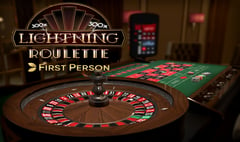
Three variants, tables with multipliers, a trial version on most titles and no imposed tempo: that is what this section holds, at an online casino licensed in Belgium.
Open your account to play for real money and spin the ball whenever it suits you.
Frequently asked questions
A single-zero table, European or French. The house edge is markedly lower there than on a double-zero wheel, and the rules are otherwise identical.
No. No method changes the expected return, because the ball does not know what happened on the previous spin. Progression systems run into betting limits and the size of your budget.
Thirty-five to one. Two neighbouring numbers pay seventeen to one, three numbers eleven, and out on the edges red or black returns one to one.
The wheel is the same, with a single zero. The French version adds rules that return or re-stake part of the outside bets when zero comes up.
Yes, on most of our tables. The trial version works with no deposit and gives access to every betting option.
Neither. They are two strictly equivalent outside bets, and the colour from the previous spin has no bearing on the next.